

When we think about heart health, many people picture a future concern. Something to deal with later in life, once the big milestones are behind us.
At NutriChem, our integrative team of naturopathic doctors, clinical pharmacists and nutritionists approach cardiovascular health as a present-day priority that influences how you feel and function right now.
Your cardiovascular system supports far more than protection against heart attacks. It plays a central role in how efficiently oxygen and nutrients reach your brain during a demanding workday, how well your muscles recover after training, and how steady your energy feels from morning to night. Your cardiovascular system quietly shapes daily performance and how you feel on a day-to-day basis more than most people realize.
Why Heart Health Deserves Your Attention
Your heart and blood vessels are in constant motion, delivering oxygen, hormones, electrolytes, and fuel to every cell in your body. Think of this system like a city’s transit network. When roads are clear and traffic flows smoothly, everything runs on time. When congestion builds or the roads deteriorate, delays show up everywhere.
As we move through midlife, several changes can place extra strain on this network. Hormonal shifts, increasing inflammation, changes in cholesterol metabolism, and rising stress loads can all affect blood vessels and circulation. For women in perimenopause and postmenopause, declining estrogen removes a layer of cardiovascular support that once helped maintain healthy vessel elasticity and lipid balance. For men, shifts in testosterone, stress, and metabolism often show up as rising blood pressure or changes in cholesterol.
High performers face an additional challenge. Long work hours, mental strain, disrupted sleep, intense training schedules, or frequent travel all increase demand on the cardiovascular system. The heart responds to chronic psychological stress in much the same way it responds to physical stress. Over time, that constant load can take a toll.
Heart Health 101: The Essentials You Should Know
Supporting heart health starts with understanding how your cardiovascular system works day to day. This system includes the heart, blood vessels, and blood, all working together to deliver oxygen, nutrients, hormones, and fuel throughout the body. When this network functions efficiently, energy, focus, and physical performance improve. When it becomes strained, issues can develop quietly over time.
What Is Blood Pressure?
Blood pressure is the force of blood pushing against the walls of your arteries with each heartbeat. It’s measured using two numbers: systolic (pressure during a heartbeat), the first number (i.e 120) and diastolic (pressure between beats (ie 80).
Healthy blood pressure allows blood to flow smoothly without damaging vessels. Chronically elevated blood pressure increases strain on the heart and arteries, while low blood pressure can impair circulation and lead to fatigue or dizziness.
According to the 2025 Hypertension Canada guidelines, you have high blood pressure if your readings are consistently at or above 130/80 mmHg if measured at home. Even if only one of your numbers (systolic or diastolic) is at or above, it’s considered high.
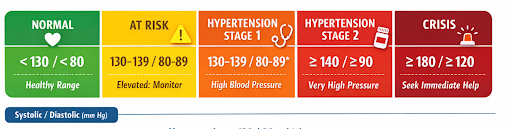
If you have one high reading, you should have it checked, using a validated blood pressure device, at least two more times on separate days to determine if it is consistently high.
Tips on measuring blood pressure:
- Proper preparation:
- A quiet, calm room with no talking
- No caffeine, tobacco, or exercise in the 30 minutes before the measurements
- Appropriate equipment: Here is a list of recommended devices for at-home monitoring
What Is Cholesterol?
Cholesterol is essential for hormone production, brain function, vitamin D synthesis, and healthy cell membranes. The concern is not cholesterol itself, but how it’s transported and managed in the bloodstream.
Because cholesterol doesn’t travel freely in blood, it’s carried by lipoproteins.
Types of Cholesterol
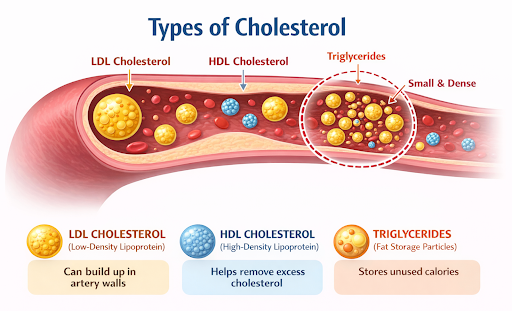
- LDL (low-density lipoprotein) transports cholesterol from the liver to tissues. Problems arise when LDL levels are high, particles are small and dense, or LDL becomes oxidized, particularly in the presence of inflammation or blood vessel damage.
- HDL (high-density lipoprotein) helps remove excess cholesterol from circulation and return it to the liver. Higher HDL levels are generally protective, but function and overall metabolic health matter more than the number alone.

Triglycerides reflect how the body stores and uses energy. Elevated triglycerides are commonly linked to insulin resistance, high refined carbohydrate intake, alcohol, chronic stress, and poor sleep. They are a particularly important marker in both men and women, as rising triglycerides often signal early metabolic strain.
Blood Vessels and Vascular Health
Healthy blood vessels are flexible and responsive, widening and narrowing as needed to regulate blood flow and pressure. Inflammation, oxidative stress, blood sugar imbalances, smoking, nutrient deficiencies, and hormonal changes can damage the inner lining of blood vessels, reducing this flexibility.
Loss of estrogen during perimenopause and postmenopause removes a key protective factor for vascular health, which helps explain why cardiovascular risk rises in women after midlife. In men, long-term stress exposure and metabolic dysfunction often accelerate vessel stiffness earlier.
Inflammation and Cardiovascular Risk

Chronic low-grade inflammation is a major driver of cardiovascular disease. It damages blood vessels, promotes plaque formation, and increases clotting risk. Oxidative stress further compounds this process by damaging cholesterol particles and vascular tissue.
Modern contributors such as poor sleep, high stress, sedentary work, ultra-processed foods, blood sugar dysregulation, and environmental exposures all increase inflammatory load.
Why This Matters
Heart health is not about chasing perfect numbers. It’s about supporting balance across blood pressure regulation, cholesterol transport, vascular flexibility, inflammation control, and metabolic health. These systems are deeply interconnected and influenced by hormones, stress physiology, nutrition, and lifestyle.
Understanding these basics helps clarify why personalized cardiovascular care matters. When the system is supported as a whole, the benefits extend beyond disease prevention to improved energy, clearer thinking, better exercise recovery, and long-term resilience.
Common Risk Factors We See in Practice
Cardiovascular risk rarely develops from a single cause. More often, it reflects a series of small imbalances that accumulate over time. Some of the most common contributors we see include:
- Chronic stress, which can raise blood pressure and promote inflammation
- Blood sugar dysregulation and insulin resistance, even in people who otherwise appear healthy
- Liver dysfunction
- Unfavourable cholesterol patterns, including elevated LDL, low HDL, or high triglycerides
- Inflammation and oxidative stress, which damage blood vessel walls
- Nutrient deficiencies, particularly magnesium, iron, omega-3 fats, and certain B vitamins
- Hormonal shifts, especially during perimenopause and postmenopause
- Sedentary workdays combined with intense but infrequent exercise
These changes often occur quietly. Many people feel well until lab work or symptoms reveal what has been developing beneath the surface. This is why early assessment and preventive support are so important.
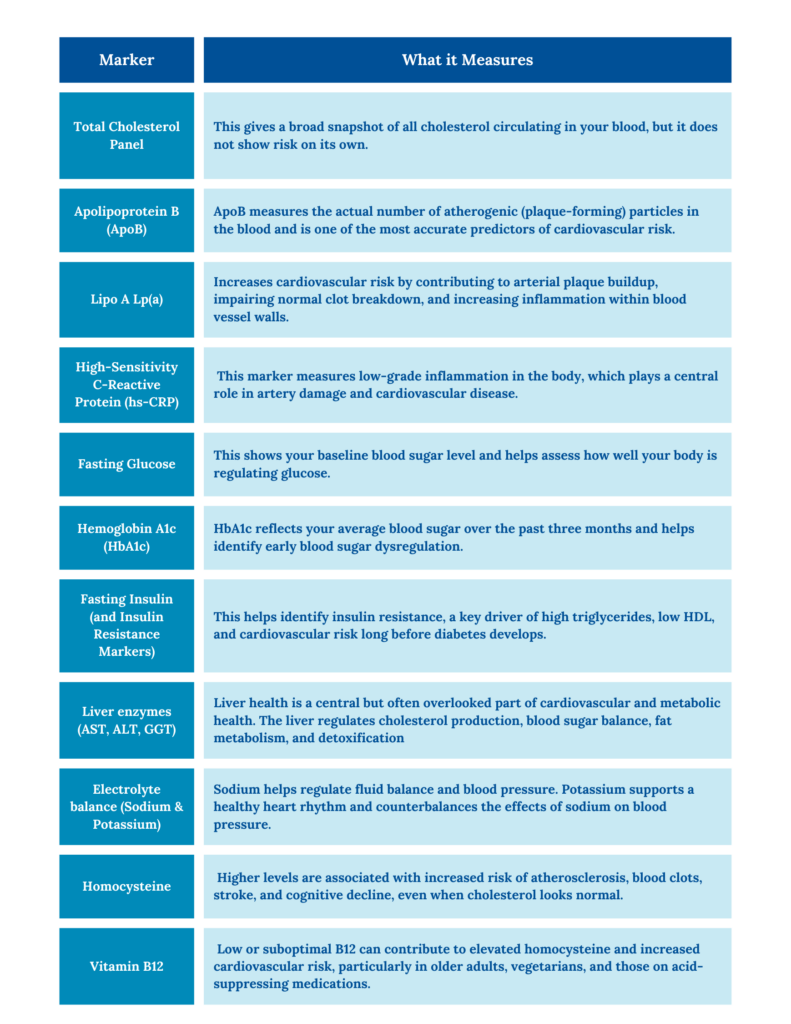
Key Cardiovascular health markers: Comprehensive bloodwork assessment:
A cardiovascular and metabolic bloodwork assessment looks beyond a single cholesterol number and helps us understand how your blood vessels, metabolism, and inflammation are influencing heart health over time. At NutriChem, we always start with a bloodwork assessment that might include:
A Proactive Investment in Longevity and Performance
Cardiovascular health supports far more than long-term disease prevention. It underpins the energy, focus, and physical capacity required to perform well at work, recover from training, and stay engaged in daily life.
When the cardiovascular system is well supported, people often notice clearer thinking, improved stamina, faster recovery, and more stable energy throughout the day. Like a well-designed transit system, the benefits extend well beyond the heart itself.
At NutriChem, our naturopathic doctors view cardiovascular care as a long-term partnership that integrates lifestyle, nutrition, targeted supplementation, and personalized guidance. Whether you are navigating hormonal transitions or striving for peak performance, proactive heart support helps keep everything running smoothly for years to come.