

2025: The Year Women’s Health Took Center Stage
For decades, women’s health, especially hormones, has lived in the shadows of medical research. Underfunded, misunderstood, and dismissed, women were often left navigating menopause, menstrual disorders, and hormonal shifts with inadequate information and even less support.
But 2025 changed the game.
This was the year women’s health finally became impossible to ignore. With regulatory milestones, record-breaking research funding, and a cultural movement demanding better care, 2025 marked the beginning of a new era – one driven by science, personalization, and women’s voices.
Let’s break down what happened, why it matters, and where we go from here.
The Big Movements of 2025
1. The FDA Removed Black Box Warnings on Menopausal Hormone Therapy
This was historic.
For years, black box warnings created fear and confusion around hormone therapy even though newer evidence consistently showed a safer, more nuanced picture.
Their removal signaled a major shift:
Hormone therapy is no longer a “last resort” but a valid, evidence-based option for many women. Although this change hasn’t happened yet in Canada, it signals that the tides are changing and the narratives around hormone therapy are being revisited and adjusted.
This change opens doors for millions who previously avoided or were denied treatment.
2. Menstruation Has Been Reframed

Periods Became Public Health, Not “Personal Problems”
Canada officially reframed menstruation as a health-equity issue, not a private hygiene matter. National policy, federal funding, and medical organizations acknowledged menstrual inequity as a barrier to work, education, and wellbeing. This shift put periods in the same category as other public-health priorities and legitimized conversations about access, pain, stigma, and care.
Your Cycle Became a Vital Sign—A Window Into Your Whole-Body Health
Clinicians and researchers highlighted that menstrual patterns (flow, timing, pain, regularity) act as diagnostic data—early clues about inflammation, metabolic health, stress, and chronic conditions like endometriosis. 2025 pushed a new standard: “Pay attention to your cycle like you do your heart rate or blood pressure.”
Innovation Exploded: From Smart Products to Pain Taken Seriously
2025 saw Canadian-led advances in smart menstrual tech, boil-free reusable cups, and sustainable period underwear, plus rising scrutiny on product safety. Meanwhile, updated medical guidance reframed painful or heavy periods as treatable medical issues, not something women should endure. The message shifted from “manage it” to “there’s science, data, and solutions.”
2025 and the Rise of the Quick Fix
This was also the year of the “hormone quick fix.” Supplements, trackers, patches, pellets – everyone wanted a shortcut. But here’s the truth:
Hormones are powerful tools, not magic bullets.
They work best when combined with the foundations:
- Sleep
- Nutrition
- Movement
- Stress regulation
Menopause is not something you “hack.” It’s a journey; nonlinear, individual, and deeply physiologic. Hormone therapy can help immensely, but only as part of a broader, holistic strategy.

Why Nuance Matters More Than Ever
Social media deserves credit for democratizing hormone information.
It amplified women’s voices, challenged outdated medical narratives, and accelerated change.
But here’s the problem:
Hormones are nuanced. Social media is not.
Big claims, simplified rules, and black-and-white advice cannot capture the complexity of women’s biology.
Nuance acknowledges that hormone therapy involves
- Personalized timing
- Individual risks and benefits
- Emotional and lifestyle context
- Biological variability
Below are key areas where nuance matters most, and where oversimplified advice can mislead women.
Where Women Need More Nuanced Information About Hormones
1. When Should a Woman Start Hormone Therapy?
Broad statement:
“Start only after 12 months without a period.”
Nuanced, evidence-informed reality:
Start when symptoms are impacting quality of life and your individual risks and benefits have been assessed.
We now know:
- Late perimenopause is often the “sweet spot” to initiate estrogen therapy.
- Starting earlier (within 1-3 years of menopause) appears to offer cardiovascular and neurological advantages.
2. Bioidentical vs. Synthetic Hormones
Broad statement:
“Synthetic is bad; bioidentical is best.”
Nuanced reality:
Both have roles.
- Synthetic hormones (e.g., birth control pills, some IUDs)
- Can suppress ovulation and bleeding
- Useful for heavy bleeding, fibroids, endometriosis, and cycle-related pain
- Bioidentical hormones
- Better tolerated in menopause
- Have strong safety profiles
- Provide symptom relief without impacting menstrual cycle
The right choice depends on the woman and the symptoms, not a blanket rule.
3. Do Women Need to Stop Hormones at 65?
Broad statement:
“You must stop HRT at age 65 or after 10 years.”
Nuanced reality:
If a woman continues to benefit, and risks are monitored, she can safely continue beyond 65.
Recent Medicare data shows:
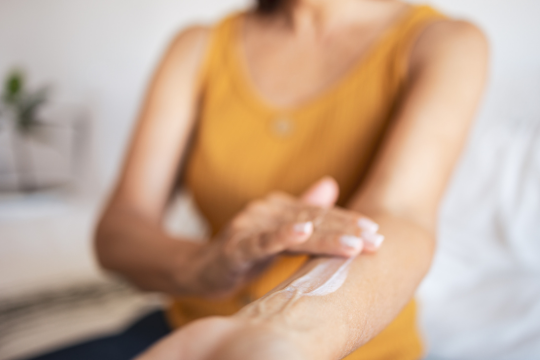
- Lower risks with low-dose,
- Transdermal or vaginal routes,
- Estradiol (E2) over conjugated estrogens.
Age alone is not the determining factor, individualized risk is.
4. Can Breast Cancer Survivors Use Hormones?
Broad statement:
“No hormones, ever.”
Nuanced reality:
For survivors suffering from:
- Painful intercourse
- Frequent UTIs
- Vaginal dryness
- Incontinence
- Pelvic discomfort
Low-dose local vaginal estrogen can be safe and effective.
A 2025 systematic review of 24,000 survivors found:
- No increased recurrence
- No rise in cancer-specific mortality
- No increase in overall mortality
This is lifesaving information for many women who have suffered unnecessarily.
Where the Evidence Is Strongest
These are the areas where hormone therapy is the gold standard:
- Hot flashes and night sweats
- Sleep disruption linked to vasomotor symptoms
- Bone density protection (in women who also have menopausal symptoms)
Where the Evidence Is Emerging (and Requires Caution + Context)
Social media often overstates certainty in these areas:
- Dementia and Alzheimer’s prevention
- Hormone use in breast cancer survivors
- Starting hormones later than 65 or more than 10 years post-menopause
- Using estradiol blood levels to adjust dosing
For example, estradiol levels vary widely, even on consistent topical dosing. Symptoms, not serum levels, remain the most reliable guide for dose adjustments.
Your Next Steps

Educate Yourself
Knowledge is power, and your body deserves informed care.
Tune Into Your Symptoms
Your experience is your most valuable data.
Explore Your Options
Your best tools are hormones, lifestyle, nutrition, movement, and stress support.
Prioritize the Basics
No hormone therapy can outrun lack of sleep, chronic stress, or nutrient deficiencies.
The Future of Women’s Health Starts Now
2025 was a turning point, but it’s only the beginning.
The next chapter is about empowerment, personalization, and science-driven care. Women are rewriting the narrative around hormones and demanding better research, better treatment, and better conversations.
And the momentum isn’t slowing down.
Let’s keep pushing for a future where women’s health is never sidelined again.
References
Pederson, Holly J. MD, MSCP. Considerations for hormone therapy use in survivors of breast cancer. Menopause 32(11):p 1060-1062, November 2025. | DOI: 10.1097/GME.0000000000002629
Baik, Seo H. PhD; Baye, Fitsum MS; McDonald, Clement J. MD. Use of menopausal hormone therapy beyond age 65 years and its effects on women’s health outcomes by types, routes, and doses. Menopause 31(5):p 363-371, May 2024. | DOI: 10.1097/GME.0000000000002335
Glynne, Sarah BSc, MBBS, MSc, MRCP, MRCGP1; Simon, James MD, CCD, MSCP2,3; Branson, Anthony FRCP, FRCR4; Payne, Stephen MB, MS, FRCS, FEBUrol5; Newson, Louise BSc, MBChB, MRCP, DHealth6; Manyonda, Isaac BSc, PhD, MRCOG7; Cleator, Susan BA, BM BCh, MRCP, FRCR, PhD8; Douek, Michael MD, FRCS, FRCS (Gen Surg)9; Usiskin, Sasha MB BCh, FRCR, MRCP10; Tobias, Jeffrey S. MD, FRCR11; Vaidya, Jayant S. MBBS, MS, DNB, FRCS, PhD, FRCS (Gen Surg)12. Menopausal hormone therapy for breast cancer patients: what is the current evidence?. Menopause ():10.1097/GME.0000000000002627, September 30, 2025. | DOI: 10.1097/GME.0000000000002627
Nacar, Gülçin PhD1; Hazar, Seda MD2; Hatun, Berfin MD3. Investigating the relationship between menopausal symptoms and gastrointestinal symptoms. Menopause ():10.1097/GME.0000000000002685, November 18, 2025. | DOI: 10.1097/GME.0000000000002685
Baik, Seo H. PhD; Baye, Fitsum MS; McDonald, Clement J. MD. Use of menopausal hormone therapy beyond age 65 years and its effects on women’s health outcomes by types, routes, and doses. Menopause 31(5):p 363-371, May 2024. | DOI: 10.1097/GME.0000000000002335
Glynne, Sarah MBBS, MSc, MRCP, MRCGP1; Reisel, Daniel MBBS, DPhil, MRCOG2; Kamal, Aini MSc3; Neville, Amy3; McColl, Lynsey PhD4; Lewis, Rebecca MBBS, FRCA, DRCOG, MRCGP3; Newson, Louise BSc, MBChB, MRCP, FRCGP3. The range and variation in serum estradiol concentration in perimenopausal and postmenopausal women treated with transdermal estradiol in a real-world setting: a cross-sectional study. Menopause 32(2):p 103-111, February 2025. | DOI: 10.1097/GME.0000000000002459