

Men over 40 tend to track numbers the way some people track hockey stats: cholesterol, blood pressure, resting heart rate… and, if they’re serious about longevity, testosterone.
Testosterone isn’t just a hormone; it’s your body’s metabolic project manager, overseeing everything from energy production to cardiovascular performance. When testosterone dips, the body starts sending subtle but increasingly louder signals: slower recovery, increased visceral fat, reduced stamina, shifts in mood, and greater cardiovascular strain.
A Quick Guide to Testosterone Lab Units (and Why They Differ Between Countries)
Canada uses nmol/L (nanomoles per litre). The U.S. uses ng/dL (nanograms per decilitre). These units measure the exact same hormone, just like kilometres and miles measure the same distance. A simple conversion: 1 nmol/L ≈ 28.8 ng/dL. So a Canadian lab value of 10 nmol/L equals ~288 ng/dL.
Low Testosterone & the Heart: What the Evidence Shows
Why Testosterone Matters for Cardiometabolic Health
1. Vasodilation: Testosterone helps blood vessels relax by increasing nitric oxide (NO) production. Think of NO as the molecule that tells your arteries, “Relax—widen the lanes.” This eases pressure on the heart and improves circulation.
2. Red blood cell production: Testosterone boosts the creation of red blood cells, improving oxygen delivery. Imagine doubling your fleet of oxygen-delivery trucks—you get more fuel to every organ.
3. Body composition: Healthy testosterone supports lean muscle and reduces visceral (deep abdominal) fat. Visceral fat releases inflammatory chemicals that strain the heart. Testosterone helps prevent this.
4. Insulin sensitivity: Adequate testosterone improves glucose regulation. Lower testosterone leads to insulin resistance, making blood sugar harder to control.
Is Testosterone Replacement Therapy (TRT) Safe for the Heart?
When medically supervised, yes. Large clinical trials show no increased risk of heart attack or stroke. There are nuanced risks—such as a slightly higher incidence of atrial fibrillation and pulmonary embolism in certain populations—but careful monitoring mitigates these. TRT helps improve body composition, glucose control, motivation, and energy, but it is not a weight-loss drug.
Risks of Testosterone Misuse
The dangers arise not from therapeutic doses, but from excessive, non-medical use—often 10–20× higher than physiological levels.
- High doses thicken the blood (elevated hematocrit), making it harder for the heart to pump and increasing the risk of clots.
- Blood pressure rises due to fluid retention and increased vascular resistance.
- Cholesterol patterns worsen, elevating LDL and lowering HDL.
- The heart muscle can enlarge abnormally (cardiomyopathy), reducing its flexibility and efficiency.
- Electrical conduction disturbances may occur, increasing the risk of arrhythmias.
In other words: therapeutic TRT restores balance; misuse disrupts multiple systems.
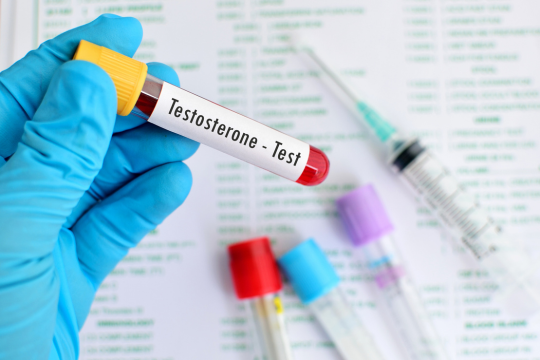
The “Optimal Zone” for Testosterone
- Below 10.4 nmol/L (~300 ng/dL): Risks begin to rise.
- Below 7.4 nmol/L (~213 ng/dL): Mortality risk increases.
- Below 5.3 nmol/L (~153 ng/dL): Highest-risk zone.
- Healthy range for most men: ~17–28 nmol/L (~500–800 ng/dL).
Higher is not better—like a Ferrari, there’s a redline.
Next Steps — Dr. Adam Recommends
Note: Dr. Adam takes these supplements personally each day (amongst a few others).
Your next step is simple: if you’re noticing changes in energy, stamina, mood, body composition, or overall vitality, booking an initial visit with one of NutriChem’s naturopathic doctors for a hormone assessment is one of the most empowering things you can do. Our team can run a full hormonal workup, evaluate your cardiovascular risk markers, and build a personalized plan that aligns with your goals — not a generic template.
Whether you’re waiting for testing, already have results, or simply want to support your metabolic and cardiovascular health proactively, these foundational nutrients are safe, effective, and commonly beneficial for men over 40.
1. Magnesium Bisglycinate — NutriChem’s Mega Mag
Magnesium is involved in hundreds of metabolic reactions — including muscle recovery, sleep quality, nerve conduction, blood pressure regulation, and testosterone synthesis. Many men over 40 are chronically low.
NutriChem’s Mega Mag contains magnesium glycinate, a form that is highly absorbable and gentle on digestion.
This is typically the first supplement I recommend for men’s metabolic and cardiovascular health.
2. Vitamin D3 — NutriChem’s D‑Best VItamin D3
Vitamin D3 is the hormonal backbone of immune function, mood regulation, bone health, and testosterone production. Deficiency is extremely common in Canada.
NutriChem’s D‑Best Vitamin D3 provides a clean, reliable source of D3 in a clinically meaningful dose.
Vitamin D3 pairs synergistically with magnesium and zinc for optimal testosterone support.
3. Zinc Bisglycinate
Zinc is essential for testosterone synthesis, sperm production, immune health, and metabolic function. Declining zinc levels are associated with lower testosterone, reduced libido, weaker immune responses, and slower recovery.
Zinc bisglycinate is the best-tolerated, most bioavailable form, and it’s also gentle on the stomach and highly absorbable.
Most men do not get enough zinc from diet alone, and supplementing is often one of the simplest ways to support hormonal and cardiovascular resilience.
4. Omega‑3 Fatty Acids — NutriChem’s Pure Premium Fish Oil
EPA and DHA are critical for lowering inflammation, improving blood vessel elasticity, supporting mood, stabilizing heart rhythms, reducing triglycerides, and supporting cognitive health — all areas that matter for long-term cardiovascular and hormonal function.
NutriChem’s Pure Premium Fish Oil is exceptional. Derived from high‑quality sardines and anchovies, it provides a potent EPA‑ and DHA‑rich formula, loaded with omega‑3 fatty acid, delivered in the perfect ratio to ensure optimal mood balance and cardiovascular health. It also undergoes rigorous purification to remove heavy metals and PCBs, ensuring ultra‑pure, contaminant‑free oil.
This is easily one of the most important supplements for men over 40.

5. High‑Quality Protein Supplementation
Adequate protein intake becomes increasingly important with age, particularly for maintaining lean muscle, supporting testosterone levels, improving metabolic rate, and preventing visceral fat accumulation.
Most men do not consume enough protein, especially at breakfast and lunch. A high‑quality protein powder helps ensure you consistently hit your daily requirement (typically 1.0–1.6 g/kg/day for men over 40 who want to maintain muscle and metabolism).
Protein helps stabilize blood sugar, enhance recovery, support hormone balance, and improve body composition — all critical factors for cardiovascular health and testosterone optimization.
How to Book Your Testosterone Assessment at NutriChem
You can schedule a comprehensive hormone and cardiovascular evaluation through the NutriChem Clinic by visiting our website or calling the clinic directly. Appointments can be done in-person or virtually, and include:
- Total, free, and bioavailable testosterone
- SHBG, estradiol, LH/FH
- Full metabolic panel
- Lipid profile
- Inflammation markers
- Personalized interpretation + tailored treatment plan
NutriChem’s integrated medical and pharmacy team ensures your plan isn’t cookie‑cutter, it’s designed for you.
Final Thoughts
Testosterone is far more than a number – it represents a man’s energy, vitality, drive, and confidence. When levels fall, even the strongest men can feel like someone quietly dimmed the lights inside. This isn’t weakness. It isn’t “in your head.” It’s physiology.
Your hormones don’t define your manhood, but they profoundly influence how your body operates. Low testosterone is a measurable, treatable biological state, not a personal failing.
At NutriChem, our care is rooted in compassion and science. We meet every man exactly where he is, whether he’s confused, frustrated, or simply wants to feel like himself again. If you’ve noticed shifts in strength, motivation, energy, or mood, you deserve answers, not judgment.
Your health story is still being written. With the right testing, support, and personalized plan, you can reclaim confidence, vitality, and long-term cardiovascular health.
NutriChem is here to help you get back to feeling like you.