


Food cravings, we all have them. They come in many shapes and forms. Maybe it’s that afternoon croissant or muffin from the bakery across the street, a piece of chocolate or a bowl of chips after dinner, or the stop at the drive-through for ice cream on the way home from work. Whatever the situation, once the thought pops into your head, it can be hard to shake.
Why do cravings happen even when we might not actually be hungry? Our brains are wired to notice food opportunities. Long ago, this helped humans survive in times when food was scarce. Today, with constant sights, smells, and ads for food around us, those same brain circuits get triggered all the time. This can spark cravings “out of nowhere”, even if your body doesn’t actually need more energy.
Keep reading for a closer look at some of the biggest drivers of craving, and why they can feel so powerful.
1. Blood Sugar Fluctuations & Metabolic Changes
As we age, we see a gradual but steady decline in our body’s ability to handle and process sugar from the diet. This change is further exacerbated by having a sedentary lifestyle and loss of muscle mass. When blood sugar drops too low or fluctuates quickly, the brain sends strong signals to eat. This often triggers cravings for quick energy foods like sugar or refined carbs. Over time, metabolic changes such as insulin resistance can intensify these cravings and make it harder to feel satisfied. Insulin resistance and blood sugar changes that shift with age and changing hormone levels can also lead to symptoms such as brain fog, abdominal weight gain and fatigue. Steady protein intake helps keep blood sugar balanced and cravings in check, and adding a protein powder to your routine can be an easy way to make it happen.
Pro-tip: Stop skipping meals; plan and pack healthy snacks like nuts, fruit or vegetables to prevent crashes and cravings.
2. Lack of Sleep
Research shows that sleep loss raises ghrelin (the hormone that stimulates appetite) and lowers leptin (the hormone that signals fullness). This hormonal imbalance makes you feel hungrier than usual. At the same time, sleep deprivation changes how the brain’s reward centers respond to food. High-calorie, sugary, and fatty foods look and taste more appealing, while your self-control circuits are less effective. In other words, your brain becomes more sensitive to junk food cues and less able to resist them.
Did you know magnesium plays a key role in relaxation and sleep quality? Adding it to your routine may help you get the rest you need.
Trying to lose weight? Then it’s time to prioritize your sleep quality.
3. Stress
When you’re stressed, your body releases cortisol and adrenaline. These hormones prepare you for “fight or flight,” but they also change how the brain regulates appetite and your blood sugar levels. Cortisol in particular increases motivation to seek high-calorie, palatable foods — especially those rich in sugar and fat.

Over time, the brain learns that eating these foods reduces stress in the short term, reinforcing the habit loop:
stress → craving → comfort food → temporary relief → repeat.
This makes stress eating more automatic, even when the body doesn’t need extra calories.
This isn’t about “weak willpower” but about deeply wired survival circuits being hijacked by modern food environments.
4. The Buffet Effect
In the book The Hungry Brain by Stephan Guyenet, the “buffet effect” is explained as a key driver of overeating and cravings. Here’s the science behind what is known as the buffet effect: When we’re offered a wide variety of foods, especially those that are calorie-dense and highly palatable (sweet, salty, fatty, or umami), our brain’s reward system ramps up. Each new flavor or texture partly “resets” our sense of satiety, so we can keep eating beyond fullness. This is called sensory-specific satiety – you get tired of one taste, but a different taste reignites appetite. This is why even after eating a full dinner, you might still have a craving for sweet or salty depending on your meal. In short:
more variety, more stimulation of reward pathways → weaker satiety → stronger cravings → overeating.
Pro tip: Limit sensory variety: Each new taste resets your brain’s satiety signals, making it easier to overeat. Sticking with fewer foods prevents this “reset button” from being pushed.
Environmental Triggers
Our brain is highly sensitive to food-related cues in the environment. Simply seeing a snack on the counter, smelling food cooking, or encountering food advertisements on our phone can light up the brain’s mesolimbic dopamine system: the motivation and reward pathways.
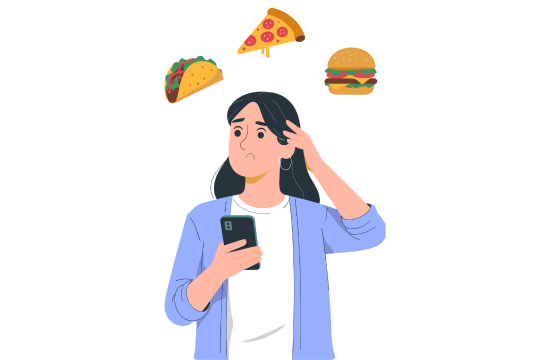
This happens even if you’re not physically hungry, because your brain evolved to treat food opportunities as precious in environments of scarcity. In today’s world of constant availability, these cues act like triggers, creating a sudden desire to eat. Research shows that people exposed to visual or sensory cues of palatable foods often consume more calories without realizing it.
Imagine going into a store just to browse. You weren’t planning to buy anything, but then you see a big display with a “limited-time sale” sign. Suddenly, you feel the urge to buy, even though you don’t need it. Food cues work the same way; the sight or smell of tempting food acts like that sale sign, pushing your brain to “buy” calories you don’t actually need.
Key Takeaways
In the end, food cravings aren’t just about willpower, they’re the result of a complex interplay between biology, environment, and lifestyle. From blood sugar fluctuations and poor sleep to stress, variety, and constant cues all around us, it’s no wonder cravings can feel overwhelming.
The good news is that by understanding what drives them, you can take back some control. Small, consistent steps like balancing meals, getting quality rest, managing stress, and being mindful of food environments can make cravings less powerful and easier to manage. Awareness is the first step, and with the right strategies, you can turn cravings from a source of frustration into an opportunity to better understand and support your body.

