


Hormones are the body’s chemical messengers. They are produced by glands in the endocrine system, they travel through the bloodstream to organs and tissues, regulating a wide range of bodily functions including metabolism, mood, growth and reproduction.
The most well-known hormones are estrogen, progesterone, and testosterone. Though often associated with a specific sex (estrogen and progesterone with women, testosterone with men) all three are present in both men and women and play critical roles throughout life.
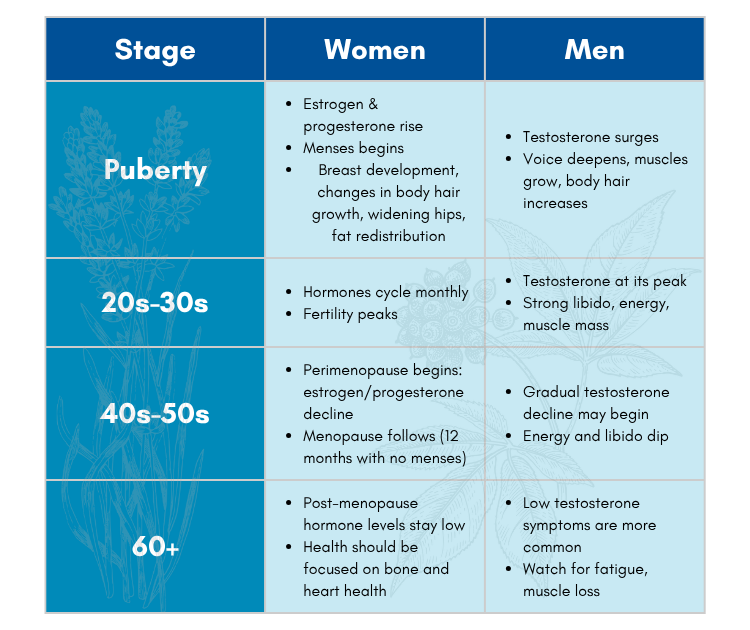
Let’s break down what each of these hormones does, and how their roles shift from puberty through midlife and beyond.
Estrogen
Estrogen is a group of hormones primarily responsible for the development and regulation of the female reproductive system and secondary sex characteristics.
In Women:
- Puberty: Estrogen levels rise, triggering breast development, the start of menstrual cycles, and changes in body shape.
- Reproductive Years: Estrogen supports fertility by thickening the uterine lining, maintaining vaginal and bone health, and stabilizing mood.
- Perimenopause & Menopause: Estrogen levels fluctuate and eventually decline, leading to symptoms like hot flashes, mood swings, vaginal dryness, and increased risk of osteoporosis and heart disease.
Beyond reproduction, estrogen contributes to bone density and has beneficial effects on cholesterol levels and vascular function. The decline in estrogen in menopause can contribute to increased with of cardiovascular disease and osteoporosis or low bone density.
In Men:
- Men produce lower levels of estrogen, but it plays an important role in sperm development, libido, and bone health.
- Imbalances can contribute to gynecomastia (enlarged breast tissue), low libido, and fertility issues.
Progesterone
Progesterone is a steroid hormone produced mainly in the ovaries after ovulation (progesterone is high during the second half of the menstrual cycle, the luteal phase), and by the placenta during pregnancy. It’s often called the “calming hormone” for its soothing effect on the nervous system.
In Women:
- Puberty: Begins to cycle in response to ovulation.
- Reproductive Years: Prepares the uterus for pregnancy after ovulation and balances the effects of estrogen. Low levels can contribute to PMS, anxiety, irregular cycles, and infertility.
- Pregnancy: Progesterone levels rise dramatically to support fetal development.
- Perimenopause & Menopause: Levels often decline before estrogen, leading to estrogen dominance, sleep disturbances, and mood instability.
In Men:
- Though present in smaller amounts, progesterone in men helps regulate testosterone, supports mood stability, and plays a role in sleep.
- Low levels may contribute to prostate issues, mood changes, and decreased libido.
Testosterone

Testosterone is the primary male sex hormone, but it’s also important for women, especially for libido, muscle maintenance, and mental clarity.
In Men:
- Puberty: Drives the development of male characteristics — deeper voice, facial/body hair, muscle mass, and sperm production.
- Adulthood: Maintains muscle strength, bone density, red blood cell production, mood, and sexual function.
- Midlife (Andropause): Testosterone levels begin to decline gradually around age 30–40, potentially leading to fatigue, decreased libido, weight gain, and mood swings.
In Women:
- Produced in the ovaries and adrenal glands, testosterone supports libido, bone density, muscle mass, energy, and overall well-being.
- Levels decline with age and more dramatically after menopause, contributing to fatigue, low sex drive, and decreased motivation.
Why Hormone Balance is Important
Balanced hormone levels are vital for:
- Emotional well-being
- Energy and focus
- Fertility and reproductive health
- Muscle and bone maintenance
- Metabolism and body composition
- Cardiovascular health
When hormones become imbalanced, symptoms can emerge that impact daily life. Imbalances are often multifactorial and may be due to age, stress, lifestyle, or medical conditions. Understanding the role of estrogen, progesterone, and testosterone can empower you to take steps toward supporting hormonal health through diet, exercise, stress management, and (if needed) medical or natural interventions.
Cornerstones for Maintaining Hormonal Health

Achieving a balance of hormones is vital for long-term health and can often be supported by lifestyle choices:
- Nutrition: A balanced diet rich in whole foods, healthy fats, and antioxidants supports overall hormonal health.
- Exercise: Regular physical activity, especially resistance and aerobic training, can help maintain healthy levels of testosterone and estrogen while promoting bone density.
- Sleep: Quality sleep is essential for hormonal regulation and recovery.
- Stress Management: Chronic stress can disrupt hormonal balance. Techniques such as meditation, yoga, and deep-breathing exercises are beneficial.
Foundational Supplements for Hormone Health
- Supports adrenal health, regulates cortisol, promotes better sleep, and helps balance estrogen and progesterone.
- Typical dose: 200–400 mg daily, ideally at night, to help with relaxation. Preferred form is magnesium bisglycinate or glycinate
- Vital for testosterone production, estrogen regulation, mood, immunity, calcium metabolism and bone health.
- Typical dose: 1000–4000 IU of D3 daily (adjust based on blood levels).
- Note: Always discuss with your healthcare provider. As a fat-soluble vitamin, it is possible to overdose on vitamin D.
- Reduces inflammation, supports mood, brain function, and hormone receptor sensitivity.
- The best source is from fish oil from wild-caught cold-water fish, or algae oil for vegetarians.
- Typical dose: 1000–2000 mg combined EPA/DHA daily.
- Supports hormone production and metabolism, supports mood, stress response, and energy.
- Typical dose: Follow label instructions; usually 1-2 capsules/day of a balanced B-complex.
- Important for testosterone production, immune health, and hormone receptor function.
- Typical dose: 15–30 mg/day (do not exceed 40 mg unless directed). The preferred form is zinc glycinate.
- Gut health is critical for hormone metabolism and nutrient absorption.
- Typical dose: Look for a multi-strain formula with 10–50 billion CFU. Combine with prebiotic fibre and fermented foods to further support gut health and hormone metabolism.
Whether you’re navigating puberty, pregnancy, perimenopause, or andropause, your hormones are working behind the scenes to guide your body through each transition. By learning about them, you can better understand yourself and make more informed decisions about your health at every stage of life. For individuals experiencing significant hormonal imbalances, working with a healthcare provider can be crucial. Hormone replacement therapy (HRT) or other interventions might be recommended based on specific needs.
Need professional hormone support? Book an appointment with one of our naturopathic doctors today to get yourself back on track.

References
Astrid M. Horstman, E. Lichar Dillon, Randall J. Urban, Melinda Sheffield-Moore, The Role of Androgens and Estrogens on Healthy Aging and Longevity, The Journals of Gerontology: Series A, Volume 67, Issue 11, November 2012, Pages 1140–1152, https://doi.org/10.1093/gerona/gls068
Cleveland Clinic. Estrogen.
https://my.clevelandclinic.org/health/body/22353-estrogen
Cleveland Clinic. Progesterone. https://my.clevelandclinic.org/health/body/24562-progesterone
Cleveland Clinic. Testosterone. https://my.clevelandclinic.org/health/articles/24101-testosterone
Harvard Health Publishing. Testosterone — What it Does and Doesn’t Do.
https://www.health.harvard.edu/drugs-and-medications/testosterone–what-it-does-and-doesnt-do
National Institute on Aging. Menopause: Symptoms and Causes.
https://www.nia.nih.gov/health/menopause

