


For decades, cardiovascular health has been viewed primarily through the lens of cholesterol, blood pressure, physical activity, smoking, and genetics. While these remain foundational risk factors for cardiovascular disease, emerging research shows that the gut plays a far more influential role in heart health than previously recognized.
The gut–heart axis describes the complex, bidirectional relationship between intestinal health and cardiovascular function. At the centre of this relationship lies inflammation, the common thread linking gut dysfunction to vascular disease.
There is a dynamic interplay between the microbiome (the diverse community of microorganisms in the gastrointestinal tract), the integrity of the intestinal lining, and the metabolites produced within the gut. When balanced, this system promotes metabolic resilience and cardiovascular protection. When disrupted, it can amplify inflammatory pathways that contribute to heart disease. In other words, what happens in the digestive tract does not stay there. It can directly affect processes that drive atherosclerosis and cardiovascular disease.
In the sections that follow, we will explore how these mechanisms work along with the dietary patterns, lifestyle strategies, and targeted nutritional supplements that can support gut integrity and reduce cardiovascular risk.
The Microbiome
The gut is home to trillions of microbes that are collectively known as the microbiome. The microbiome plays a central role in digesting dietary fiber, maintaining a healthy intestinal lining and producing key metabolites. It is through these microbial metabolites, that the microbiome influence can regulate immune responses and influencing lipid and glucose metabolism which ultimately impact cardiovascular health.
Among the most important of these metabolites are short-chain fatty acids (SCFAs), such as butyrate, which generally support metabolic and immune health; and trimethylamine N-oxide (TMAO), which has been associated with increased cardiovascular risk. These microbial byproducts influence systemic inflammation, immune activation, lipid metabolism, vascular function, and even clotting risk.
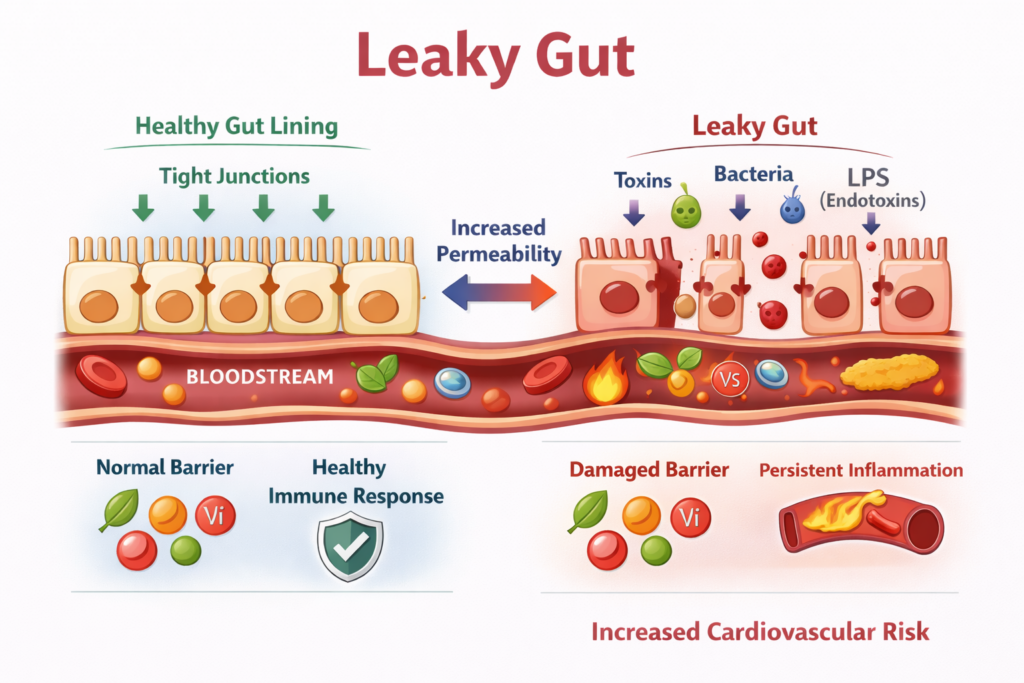
Intestinal Permeability: What is “Leaky Gut?
A critical component of the gut-heart axis is the intestinal lining. A healthy gut lining acts as a selective barrier, allowing nutrients to pass into circulation while keeping harmful substances such as bacterial fragments, called lipolysaccharides (LPS), contained within the gut. When this barrier becomes compromised inflammatory molecules can enter the bloodstream. This condition is referred to as intestinal permeability or “leaky gut”. When LPS pass through the barrier and enter circulation, this can trigger chronic, low-grade inflammation, a key driver of the endothelial dysfunction and plaque formation involved in cardiovascular disease.
Signs Your Gut Barrier May Be Compromised
While there is a clear link between gut health and cardiovascular health, the signs and symptoms of increased cardiovascular risk may not be as easily identifiable; whereas the symptoms of compromised gut health are.
Some clues that you may indicate your gut barrier is compromised may include:
- Excessive bloating or digestive discomfort
- Excessive or foul-smelling gas
- Infrequent or variable bowel movements
- New or worsening food sensitivities
- Skin concerns such as persistent rashes, eczema, acne, rosacea, hives
- Fatigue and brain fog, worse after meals
- High or low blood sugar
How to Support Your Gut-Heart Axis
Diet
1. Mediterranean Diet
This is one of the most studied dietary patterns for heart health. Rich in vegetables, legumes, olive oil, lean proteins such as poultry and fish, herbs, and polyphenol-containing foods, it increases microbial diversity; promotes anti-inflammatory SCFAs; reduces oxidative stress and lowers cardiovascular risk markers. Its high phytonutrient and fiber content feeds beneficial gut bacteria while lowering systemic inflammation
2. Fiber
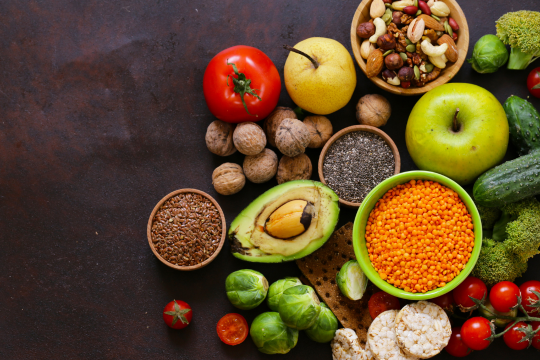
Aim for a variety of soluble and insoluble fibers from vegetables, flax, chia, legumes, berries, and whole foods. Fiber builds a strong foundation for gut and heart health by feeding beneficial bacteria, producing SCFAs like butyrate that calm inflammation, improving cholesterol metabolism and supporting blood sugar balance.
3. Probiotic foods
Fermented foods such as sauerkraut, kefir, kimchi, and yogurt help to enhance microbial diversity, strengthen gut barrier integrity, reduce inflammatory signalling, and improve lipid metabolism.
Targeted Nutritional Supplements
While food is foundational, targeted supplementation may further support the gut–heart axis by filling in dietary gaps and repairing a compromised intestinal barrier.
- Fiber (ie. hydrolyzed guar gum): Can help boost your daily fiber intake to support microbiome balance, improve stool consistency, and lower LDL cholesterol.
- Probiotics: A multi-strain probiotic can help to diversify the microbiome and may reduce inflammation, improve lipid markers, and strengthen gut barrier function.
- Omega-3 Fatty Acids: Have potent anti-inflammatory properties and can support endothelial (blood vessel) health, improve triglycerides, and support the gut barrier.
- L-Glutamine: An important fuel source for intestinal cells that helps to support gut lining repair and integrity and may reduce endotoxin-related inflammation.
- Zinc carnosine: A critical nutrient that helps to support immune balance, aids in gut barrier repair, reduces inflammatory signalling
- N-Acetylglucosamine: An essential compound used to support and repair the gut lining and calm immune activation.
- Aloe Vera: Helps to sooth intestinal inflammation, supports mucosal healing and may improve bowel regularity

Final Thoughts
The gut–heart axis reminds us that cardiovascular disease is not just a cholesterol story, it is an inflammation and microbiome story.
By prioritizing microbiome diversity, gut barrier integrity, and anti-inflammatory nutrition, you create a powerful upstream strategy to lower cardiovascular risk and build long-term resilience.
A healthy gut doesn’t just feel better, it protects your heart!
Ready to support your gut and protect your heart?
References
Bui, T. V. A., Hwangbo, H., Lai, Y., Hong, S. B., Choi, Y.-J., Park, H.-J., & Ban, K. (2023). The gut-heart axis: Updated review for the roles of microbiome in cardiovascular health. Korean Circulation Journal, 53(8), 499–518. https://doi.org/10.4070/kcj.2023.0048
Makkieh, Y., Shah, H. H., Imran, S. B., Pathan, S. M. K., Saju, A. C., Majooju, M., Garg, A., Naag, T., Islam, R., Fahima, C., & Ali, R. (2026). The gut-heart axis: Exploring the role of the gut microbiome in cardiovascular health – A focused systematic review. American Heart Journal Open. https://doi.org/10.1016/j.ahjo.2025.100687
Mylavarapu, M., Tiwari, A., Kaur, H., Vempati, R., Kumar, H., Kodali, L. S. M., Khan, K. G., Dadana, S., Garcia, I., Parada Cabrera, F. E., Singh, A., Kyasa, S. L., & Purewa, V. S. (2026). The gut–heart axis: A comprehensive review of microbiota’s role in cardiovascular health and disease and emerging therapeutic strategies. Cardiology Research and Practice, 2026, Article 9920016. https://doi.org/10.1155/crp/9920016

